New Federal FASD Law
New Federal FASD Law Validates Work Long Led by The Florida Center for Early Childhood
Section 104 of the FASD RESPECT Act creates a national framework for screening, training and FASD-informed care—work The Florida Center has pioneered across Florida since 2005.
Despite affecting an estimated 1 in 20 individuals, making it more common than autism, FASD remains one of the most under-recognized neurodevelopmental conditions in the country.
(February 14, 2026) Fetal Alcohol Spectrum Disorders are among the leading preventable causes of intellectual and developmental disabilities, yet they remain one of the most under-recognized and misunderstood neurodevelopmental conditions in the country. Because symptoms are often subtle and misinterpreted as behavioral issues, many individuals with FASD go undiagnosed and unsupported for years.
The recent passage of the FASD RESPECT Act—specifically Section 104 of the federal SUPPORT for Patients and Communities Reauthorization Act of 2025—marks a historic shift in how the United States addresses these challenges. The federal law creates a mandate for coordinated national and state-level systems for prevention, identification, intervention, and lifelong support for individuals and families impacted by FASD.
For The Florida Center for Early Childhood, which has operated Florida’s only statewide FASD diagnostic and support network since 2005, some of the language in Section 104 aligns with services the organization currently provides, while also pointing to important areas where needs are not yet being met.
“The passage of this law is deeply meaningful for families and professionals who have been working in this field for decades,” says Tamra Cajo, LCSW, statewide director of Fetal Alcohol Spectrum Disorders Services at The Florida Center. “This doesn’t just acknowledge FASD. It creates a mandate to rebuild and strengthen systems for prevention, identification, intervention, and lifelong support. It validates what families have known all along; these are brain-based conditions, not behavior problems.”
Section 104 directs the U.S. Department of Health and Human Services to establish comprehensive FASD education, screening, diagnosis, research, professional training, and coordinated services across systems, including healthcare, education, child welfare, justice, and social services. It also introduces the formal definition of “FASD-informed” care and authorizes grants to organizations with demonstrated expertise in the field.
“In practical terms, this gives Florida the federal framework and momentum we’ve been missing,” Cajo says. “It helps move FASD from being seen as a niche issue to a public health and systems issue. It positions us to build real infrastructure across the state.”
At The Florida Center, that infrastructure has long been underway. The organization provides FASD evaluations, professional training across multiple sectors, public awareness efforts, mental health treatment, caregiver support, and leadership through a statewide FASD Task Force. Its clinics in Sarasota, Orlando, and Pensacola serve families across Florida.
“Much of Section 104 reflects the kind of work already underway at The Florida Center,” Cajo explains. “That includes training educators, clinicians, child welfare professionals, and healthcare providers; building public awareness; evaluating individuals for FASD; and providing FASD-informed consultation and support. This legislation affirms that these efforts belong in every state, not just in isolated pockets.”
Cajo says the goal now is integration across systems rather than one-time trainings.
“Our focus is embedding FASD-informed practices into entire systems,” she says. “Section 104 gives us both a roadmap and the leverage to expand that work.”
She envisions regional training hubs, online learning platforms, partnerships with universities and agencies, and the development of standardized screening, referral pathways, and FASD-responsive policies across Florida.
A key component of the law is its emphasis on “FASD-informed” care—a shift that changes how professionals interpret behavior in children and adults affected by FASD.
“FASD-informed means you stop asking, ‘Why won’t this child listen or follow directions?’ and start asking, ‘What’s getting in their way?’” Cajo says. “Instead of seeing behavior as willful or oppositional, you recognize differences in memory, processing speed, impulse control, and executive functioning. Sometimes it’s as simple as slowing down speech, using visuals, or adjusting expectations. That one shift can change a child’s life.”
Despite affecting an estimated 1 in 20 individuals, making it more common than autism, FASD remains one of the most under-recognized neurodevelopmental conditions in the country.
“In Florida, we evaluate roughly 140 children per year for FASD,” Cajo says. “That is a tiny fraction of the estimated need. Many families can’t travel for evaluations. Many professionals don’t know FASD exists. Adults with FASD are largely unsupported. This law helps us start addressing those gaps.”
The legislation authorizes $12.5 million annually nationwide through 2030 to build capacity for screening, diagnosis, training, and coordinated systems of care. While Cajo notes that funding is far from sufficient to meet national need, it provides crucial leverage for states to grow programs and seek additional appropriations.
“For families and professionals who have been working in this field for decades, the passage of the FASD RESPECT Act is a historic and deeply meaningful moment,” Cajo says. “For the first time, there is real federal recognition that these are brain-based conditions requiring coordinated systems of care. It doesn’t solve everything overnight, but it changes the conversation.”
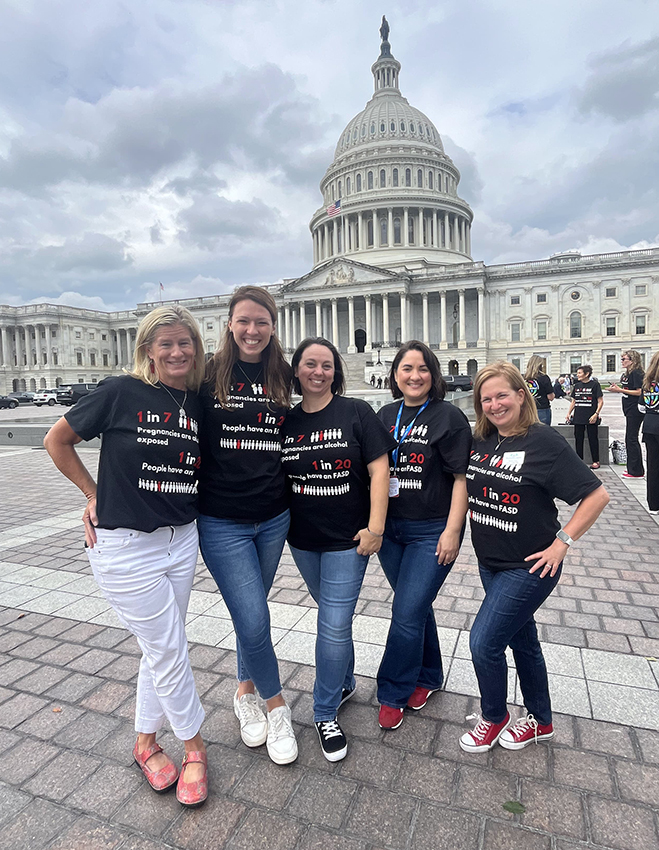
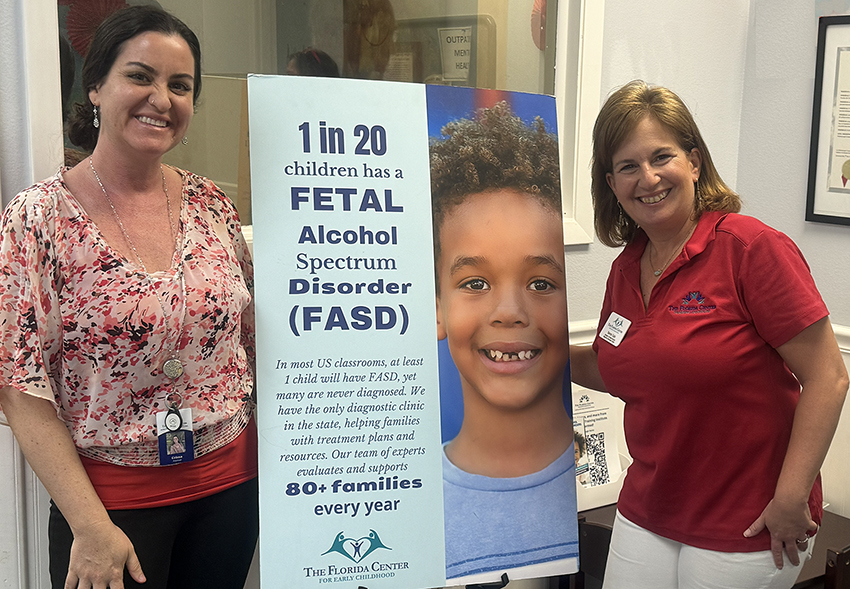
Photo captions:
- Representatives from Florida, including The Florida Center’s FASD team, joined advocates from across the country in Washington, D.C. in September 2025 for FASD United’s annual FASD Impact Week, which includes training sessions and a day of meetings with legislators on Capitol Hill. (Left to right): Barb Clark, FASD consultant with FASD Mosaic; Katie Holman, FASD advocate and caregiver; Jennifer Werden, MSW, outreach and engagement coordinator at The Florida Center; Kristal Pollack, LCSW, supervisor of FASD services in Orlando at The Florida Center; and Tamra Cajo, LCSW, statewide director of FASD services at the Florida Center.
- Tamra Cajo, LCSW, statewide director of Fetal Alcohol Spectrum Disorders (FASD) services, and Crissa Harman, LMHC, supervisor of FASD services in Sarasota, stand in front of The Florida Center’s Sarasota FASD Clinic, dedicated to supporting families and children affected by FASD.
About The Florida Center for Early Childhood
For more than 45 years, The Florida Center for Early Childhood has been the leading provider of therapeutic services, early education, and healthy development for young children in southwest Florida, offering a seamless delivery of services for the whole child and their family. Today, the agency is nationally recognized for its early childhood expertise in various specialties. The Florida Center provides developmental therapies, mental health counseling, Starfish Academy preschool, the Healthy Families home-visiting program, and the state’s only Fetal Alcohol Spectrum Disorders Clinic, with locations in Sarasota, Orlando and Pensacola.
